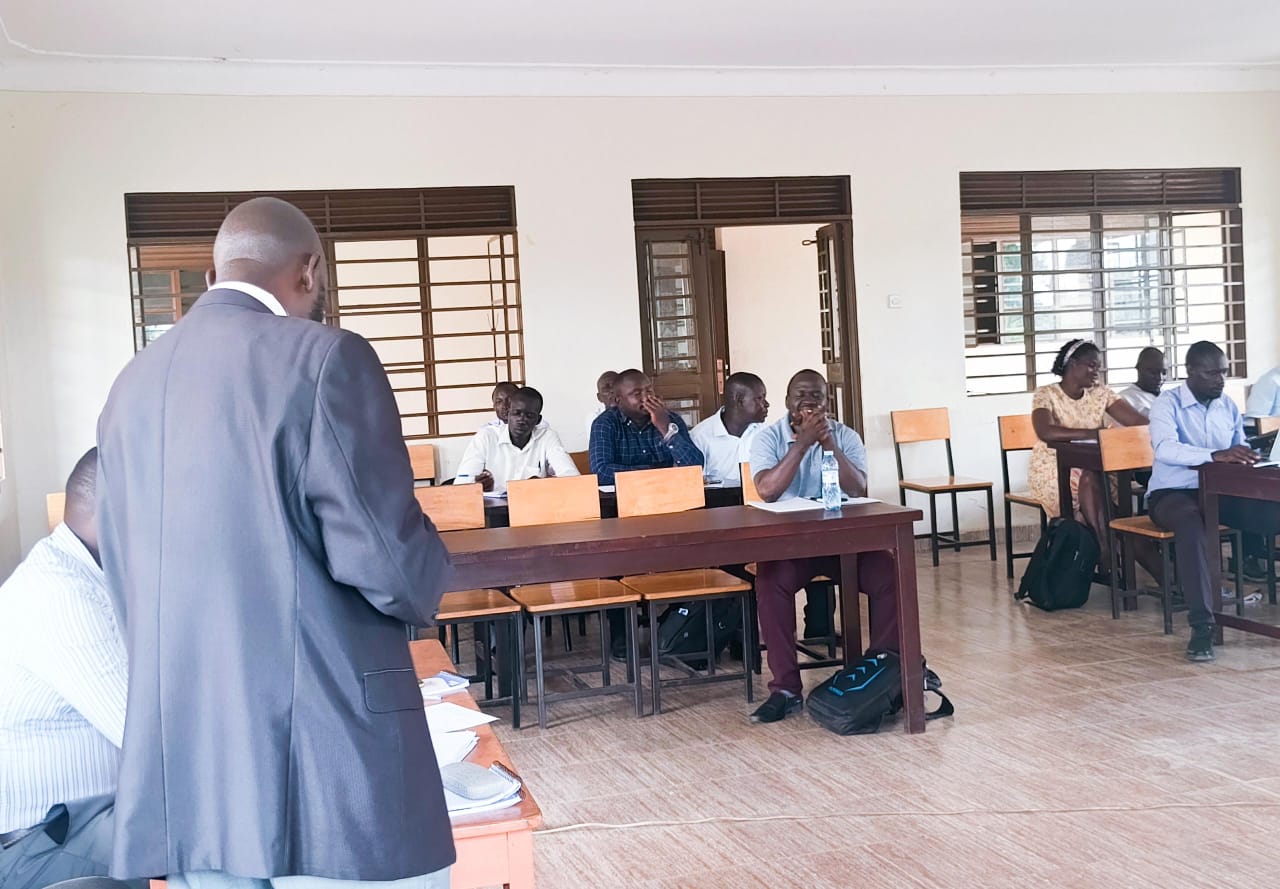
Kapelebyong District leaders and technical officers have been trained on the Market-Based Sanitation approach aimed at improving access to affordable, durable, and sustainable sanitation products for households, schools, and communities.
The training, organized by Soroti Catholic Diocese Integrated Development Organization (SOCADIDO), brought together key district departmental heads, and other stakeholders to build a shared understanding of the new sanitation model and explore how it can be integrated into district planning and implementation.
Speaking during the opening session on Tuesday April 21, 2026, Daniel Akudo, the Programmes Manager at SOCADIDO, said the organization is currently implementing a School WASH (Water, Sanitation and Hygiene) project at Adepar Primary School in Kapelebyong District.
He explained that the project seeks to enhance resilience and inclusivity within schools while also benefiting surrounding communities.
“Through this project, we are looking at increasing resilience and inclusivity in schools and neighboring communities. But part of this intervention is also to promote the adoption of the Market-Based Sanitation implementation approach,” Akudo said.
He noted that unlike traditional sanitation interventions, where communities often depend on handouts such as slabs, sanitation materials, and equipment from NGOs or development partners, the Market-Based Sanitation model introduces a business-driven solution.
“This approach shifts the mindset from dependency to sustainability. Instead of waiting for free sanitation products, we work with local businesses and entrepreneurs to strengthen the supply chain for sanitation goods and services,” he added.
Akudo said the model is designed to improve access to affordable and durable sanitation products, giving households a variety of choices when constructing or upgrading sanitation facilities such as latrines, handwashing stations, and other hygiene-related infrastructure.
He emphasized that because the concept is still new in many areas, it was necessary to engage critical stakeholders, especially district leaders, who play a key role in planning, budgeting, mobilization, and policy implementation.
“We identified district stakeholders as central actors in this process. That is why we organized this workshop, to orient them on the concept so that there is a common understanding. We want this approach not only adopted, but sustained and scaled up across the district,” Akudo explained.
According to him, district leaders are influential decision-makers whose support can ensure sanitation investments are included in local government budgets and development plans.
“They are responsible for mobilizing communities and allocating resources. If they appreciate this approach, then sanitation interventions will receive the attention they deserve,” he said.
Akudo further noted that for the project to succeed, building the capacity of district leaders and technical staff is essential.
“The success of this project depends on increased knowledge and understanding among district stakeholders. That is why this two-day workshop is important,” he said.
During the training, participants were introduced to the principles and components of Market-Based Sanitation, implementation strategies, and how it differs from other existing approaches such as sanitation marketing.
“There are clear differences between sanitation marketing and Market-Based Sanitation. Our facilitators are helping participants understand these distinctions so that they can effectively support implementation,” Akudo noted.
The training is expected to equip leaders with the skills needed to guide communities, supervise implementation, and support local entrepreneurs involved in sanitation businesses.
The Deputy Chief Administrative Officer (CAO) of Kapelebyong District, Shaineh Nelson, commended SOCADIDO for complementing government efforts through impactful development programs across Kapelebyong and the wider Teso sub-region.
He said the organization has consistently supported communities in areas where government resources remain limited.
“SOCADIDO is doing a great job, one that greatly supports government responsibilities. Their projects are helping not only Kapelebyong District but also other districts across Teso,” Shaineh said.
He called for intensified sanitation campaigns to ensure communities understand the importance of hygiene, proper use of sanitation facilities, and long-term maintenance.
“Sanitation campaigns must be scaled up and protected. Stakeholders should continue engaging communities on operations and maintenance of these facilities so that they remain functional for many years,” he emphasized.
Shaineh also applauded SOCADIDO for easing pressure on the district budget, noting that many local governments operate under financial constraints.
“The district operates on a small budget. When partners like SOCADIDO come in to support essential services such as sanitation, they reduce a huge burden on government,” he said.
He urged all stakeholders present to embrace partnerships that create practical and sustainable solutions for communities.
The Market-Based Sanitation approach is increasingly being recognized as a long-term solution to poor sanitation challenges, especially in rural communities where access to quality facilities remains low.
Poor sanitation remains one of the leading causes of preventable diseases such as diarrhea, cholera, and typhoid, especially among children in rural schools and households.
Emmanuel Opio the Communications Officer for Kapelebyong District, expressed optimism that if properly implemented, the approach could transform sanitation standards in Kapelebyong District and beyond.