
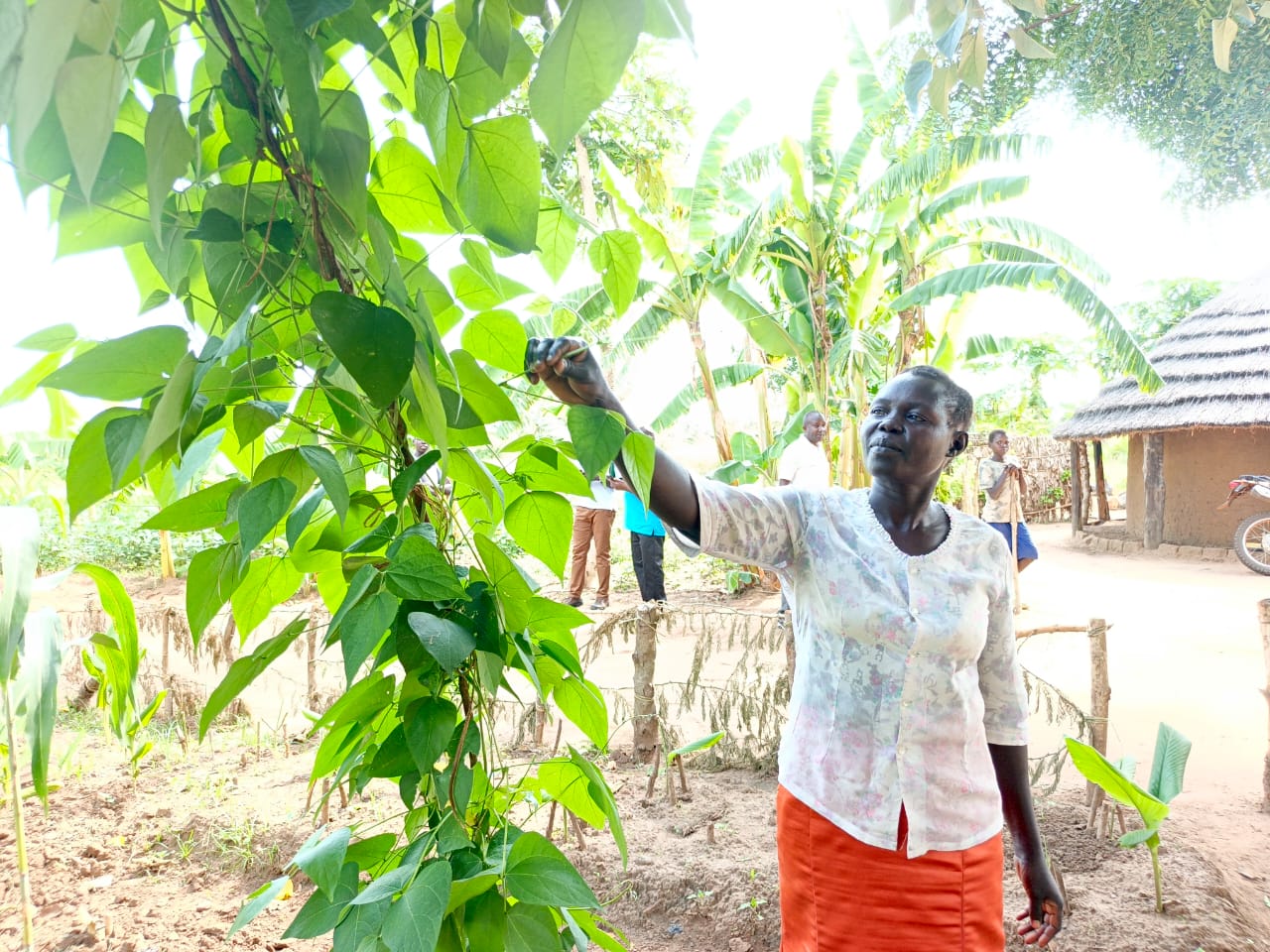
Under the scorching sun of Angobo Village, Katakwi Sub County in Katakwi District, where climate shocks and poverty have left many families struggling to survive, one widow has transformed hardship into hope. At 40 years old, Alungat Jeniffer, a mother of six, has turned her modest two-acre piece of land into a thriving farming enterprise that now feeds her family, pays school fees for her children, and inspires other women in her community.
After losing her husband, Alungat faced the harsh reality of raising six children single-handedly with limited resources and unpredictable weather conditions threatening agricultural production. But through agroecology training provided by SOCADIDO through its project Enhancing Food Systems Resilience through Agroecology and Responsible Land Governance (SARRL) with support from DanChurchAid in Uganda, she acquired practical knowledge and skills in sustainable farming that changed the course of her life. Today, her small farm stands as a testimony to how climate-smart agriculture and community empowerment can restore dignity, improve livelihoods, and build resilience among vulnerable households in Katakwi and Kapelebyong districts.
Before receiving support and training, Alungat cultivated crops such as cassava, maize, sorghum, and groundnuts primarily for food. Whatever little surplus remained after feeding the family was sold to meet basic needs. From two acres of cassava and groundnuts, she earned less than one million shillings per season, income that barely sustained her family.
“I used to farm only for food and not for business,” Alungat recalled during an interview at her farm. “Life was difficult because I could not fully provide for my children and sometimes depended on well-wishers for survival.”
However, her fortunes changed after joining agroecology trainings organized by SOCADIDO under the project Enhancing Food Systems Resilience through Agroecology and Responsible Land Governance (SARRL), implemented with support from DanChurchAid Uganda.
Through the training sessions, Alungat and other farmers were introduced to modern and sustainable agricultural practices including proper garden preparation, crop spacing, pest management, soil fertility improvement, organic farming methods, and market-oriented production.
According to Alungat, one of the most important lessons she learnt was the importance of planning farming as a business rather than simply planting for subsistence.
“I learnt that before planting any crop, I must first know whether there is a market for it,” she explained. “That changed my mindset completely.”
Armed with new knowledge and confidence, she reorganized her farming activities and began growing horticultural crops using organic manure and environmentally friendly pest control methods. Today, her two-acre farm produces highly admired organic products that are sold in Ocorimongin weekly market and the Katakwi town daily market.
Her income has since tripled. Alungat says that in the first season after adopting the new farming practices, she earned approximately UGX 1.5 million, a figure that motivated her to expand and improve production further. She now earns around UGX 2.52 million per season, enough to cater for school fees, household expenses, and reinvestment into farming activities.
“With two acres, I now earn more than I did before, and this time it is real income,” she said with a smile. “I also have the liberty to decide how to use it.”
The widow proudly says her farming enterprise has restored dignity and stability in her home. Her six children are now able to attend school consistently, and the family’s nutrition has improved significantly due to diversified food production.
Alungat has also become a role model to many women in the community who now look up to her as proof that small-scale farming can become profitable when approached with knowledge and planning.
Despite the success, challenges still remain. Access to water for irrigation continues to hinder expansion of her enterprise. However, she hopes that in the future she can invest in better irrigation systems and venture into organic seedling production to support other farmers within the community.
“I want to produce seedlings for other farmers,” she said. “If they can access good seedlings nearby, they can improve their yields, and I can also increase my planting cycles.”
Alungat’s transformation reflects the broader impact the SARRL project is having among rural households in Katakwi and Kapelebyong District.
Tom Peter Aisu, the SARRL Project Coordinator at SOCADIDO, revealed that the initiative targeted about 2,395 women and 1,725 men across the region.
He explained that the project focuses on increasing adoption of agroecological practices among smallholder farmers while strengthening responsible land governance and improving access to sustainable markets.
“The beneficiaries have gained knowledge and practical skills that are improving crop yields, biodiversity, and household incomes,” Aisu said. “We are also empowering rural communities to defend their land rights and become more resilient to climate shocks.”
He noted that SOCADIDO has worked closely with local authorities to ensure farmers receive continuous training and support aimed at helping communities withstand crises and move towards sustainable livelihoods.
Aisu praised Alungat for effectively utilizing the knowledge imparted through the project, saying many farmers in Teso remain trapped in subsistence agriculture because of limited exposure to modern farming practices.
“She is a good example that smallholder farmers can transition from subsistence farming to farming as a business,” he said.
During a recent field visit to various project sites in the region, Mary Bekunda Kobusingye, Programme Manager for Build Resilient Communities at DanChurchAid Uganda, commended farmers for embracing agroecological farming methods.
Kobusingye visited several initiatives in Katakwi including the Potato Vine Multiplication Group in Okokoma Village, Okokoma Parish, Akoboi Sub County. She expressed admiration for the level of community participation and innovation being demonstrated by farmer groups.
She particularly praised Alungat’s journey from vulnerability to self-reliance, describing it as evidence that empowering rural women through knowledge and sustainable agriculture can transform entire communities.
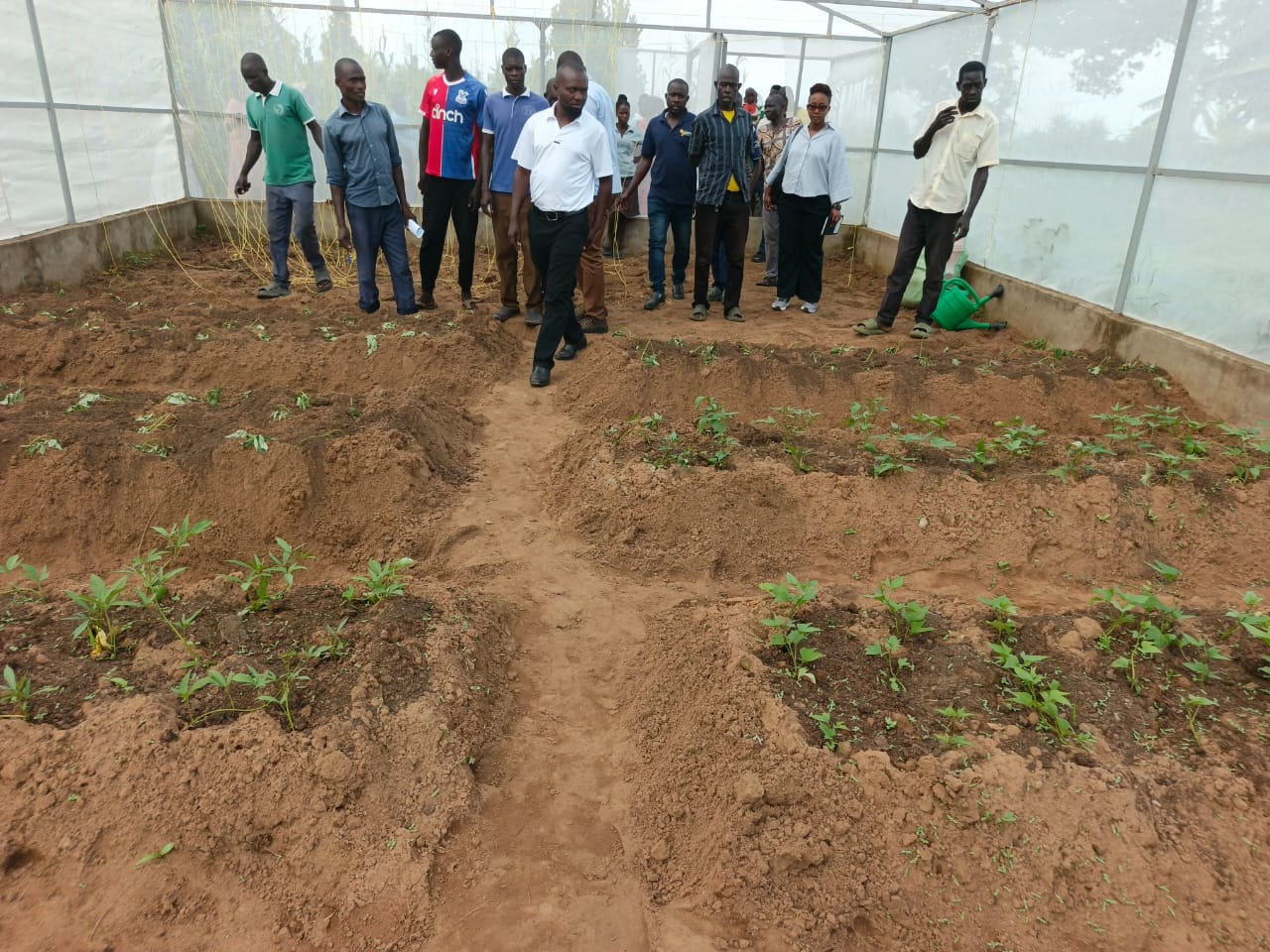
Meanwhile, beneficiaries of the potato vine multiplication initiative also highlighted the positive impact of the programme.
Oburatum Samuel, one of the project beneficiaries, said the initiative has enabled farmers to identify and multiply disease-free potato vines locally, reducing dependence on expensive planting materials from outside the district.
Oburatum revealed that their group, which consists of 60 members, hopes to begin supplying quality potato vines to farmers across the region, creating additional income opportunities while improving agricultural productivity.
As climate change continues to threaten food production in many parts of Uganda, stories like Alungat’s are increasingly demonstrating how sustainable agriculture, community empowerment, and access to knowledge can help vulnerable households build resilience and secure better futures.
“Farming changed my life,” Alungat said. “Now I know that even a small piece of land can create a better future.”
Wow that’s wonderful 👍