
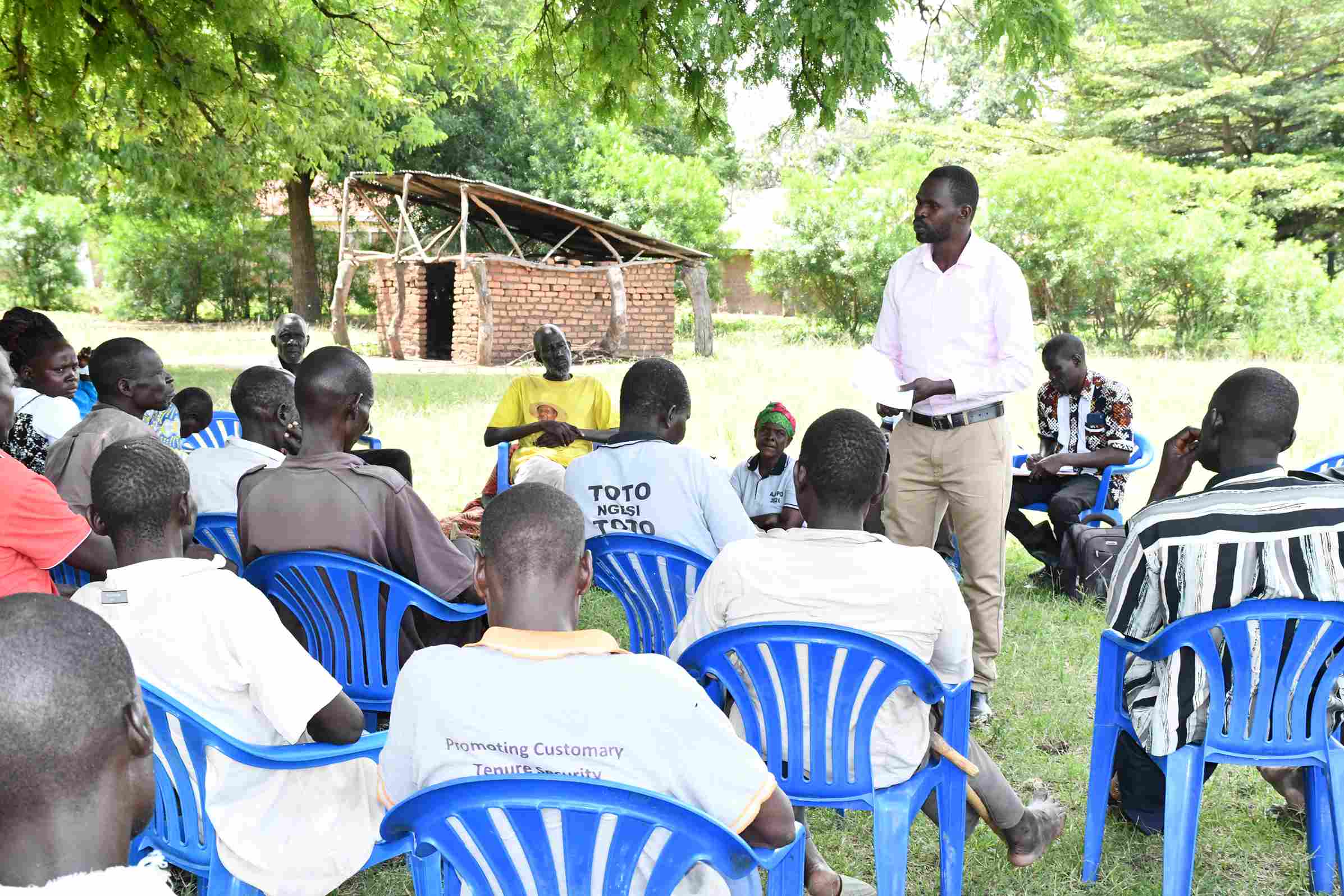
Soroti Catholic Diocese Integrated Development Organisation (SOCADIDO) has launched a three-year agro-forestry initiative aimed at transforming the livelihoods of more than 2,160 rural households in Katakwi and Kapelebyong districts through sustainable agriculture, improved incomes, nutrition security, and biodiversity conservation.
The project, titled Enhancing and Sustaining Agricultural Livelihoods (ESALI) for Incomes and Biodiversity among Rural Smallholder Farmers in Teso Sub-region, is being funded by Vi Agroforestry and is expected to improve resilience of farming communities against the growing threats of climate change and environmental degradation.
The initiative seeks to improve smallholder farmer families’ food and nutrition security, promote sustainable livelihoods, advance gender equality, and build resilience while enhancing biodiversity conservation and climate change mitigation.
Speaking about the project, Richard Pius Okiria, the Project Coordinator for ESALI, said the programme is specifically designed to empower rural households with practical planning tools that will guide them toward long-term prosperity.
He explained that the project will support 2,160 households to develop and implement Household Road Maps, which will translate the project’s broader goals into clear, achievable and seasonal household actions focused on production, food security, nutrition, income diversification, and environmental stewardship.
“These Household Road Maps will help families identify priorities, organize resources, and make strategic decisions that improve their livelihoods while protecting the environment,” Okiria said.
Okiria noted that, the project will strengthen business and financial management skills among 72 farmer groups, directly benefiting all 2,160 members, 60 percent of whom are women.
The programme will also establish 32 new Village Savings and Loan Associations (VSLAs) with approximately 30 members each, bringing the total number of supported groups to 72.
According to Okiria, the savings groups will help farmers mobilize local resources, access credit, and invest in productive ventures such as improved farming, livestock enterprises, and small businesses.
The project will further train 960 VSLA members drawn from the newly formed groups in financial literacy, household budgeting, saving habits, loan management, and productive investment planning.
Training sessions will be conducted during VSLA meetings and parish learning gatherings by field staff and Community Based Trainers (CBTs).
“In Year One, farmers will focus on core financial literacy modules. In Year Two, they will deepen their knowledge in enterprise investment planning linked to climate-smart agriculture and diversified livelihoods. Continued coaching in Year Three will help households make better financial decisions and withstand economic shocks,” Okiria explained.
SOCADIDO will also facilitate linkages between the 72 farmer groups and formal financial institutions as well as agricultural insurance providers once strong governance and record-keeping systems are established.
The project will also train 960 farmers, including 384 men and 576 women, through the Farmer Family Learning Group (FFLG) approach. These trainees will come from the 32 newly formed groups under the ESALI-II phase, while older groups had already benefited from similar interventions under ESALI-I. The training will use participatory and hands-on methods, enabling farmers to adopt practical farming skills that increase yields while preserving the environment.
He further added that, the project will establish eight farmer-managed demonstration plots in strategic parishes across the target areas.
“Each parish will host one demonstration site where farmers will learn Sustainable Agricultural Land Management (SALM), Farmer Managed Natural Regeneration (FMNR), Agro-forestry systems, and diversified farming practices. These demonstration plots will serve as local learning hubs where farmers can observe and practice innovative methods before replicating them in their own gardens,” Okiria said.
SOCADIDO will also further train all 2,160 smallholder farmers, with women making up 60 percent of beneficiaries, on post-harvest handling and management The training will focus on reducing losses after harvest, maintaining quality, safe storage, and improving product value.
In addition, the project will provide monthly market information and quality updates to help farmers and farmer groups make informed production and marketing decisions. The project has placed strong emphasis on household nutrition, recognizing that improved agricultural production must also lead to healthier families.
“We will train 960 farmers from the newly formed groups on nutrition gardening through practical sessions conducted at household compounds and community demonstration sites. Families will be guided on establishing kitchen gardens, growing nutrient-rich vegetables, and integrating diverse food crops into their diets,” Okiria noted.
Additionally, the project will organize three annual community cooking demonstration and competition events, one each year, to promote dietary diversity, food safety, and affordable meal preparation using locally available foods. “These events will encourage communities to embrace healthy eating habits while using the foods they already grow,” Okiria noted.
The project will facilitate Participatory Climate Services for Agriculture (PICSA) training for 960 farmers to enhance their ability to interpret and use climate and weather information in production planning.
SOCADIDO will also coordinate dissemination of 30 regular agro-meteorological advisories on a monthly basis over a 30-month period. These advisories will guide farmers on planting seasons, rainfall trends, pest outbreaks, and risk management.
Furthermore, the project will establish and train eight parish-level Disaster Risk Reduction (DRR) committees to strengthen community preparedness for drought, floods, pests, and other hazards. The committees will comprise local leaders, farmer representatives, and other stakeholders who will receive training in hazard mapping, prevention measures, early warning systems, and coordinated response mechanisms.
During the project rollout at Odiding Parish, the Parish Chief Okolimo Jimmy welcomed the intervention and urged residents to unite for the development of their community.
He said progress can only be achieved when communities work together and fully participate in programmes designed to uplift livelihoods.
“This project presents a great opportunity for our people to improve farming, incomes, and household welfare. Let us embrace unity and work together for the good of Odiding and the wider community,” he said.
It’s a good move, I also need to join the program
Thank you For this initiative. I am a researcher from Makerere University Business School. I am doing a research on survival of savings groups. I wanted to use your groups for my research. Please get back to me
We request you to spare time to visit the SOCADIDO offices in Soroti City and hava a conversation with the management.
Thanks
From SOCADIDO Team