
Every year, during the sacred season of Lent, the Catholic Church in Uganda pauses for a deeply reflective and action-oriented observance known as Caritas Week. Celebrated in the days leading up to Palm Sunday, this annual gathering brings together Caritas organizations from across the country in a spirit of unity, prayer, and renewed commitment to the Church’s social mission.
More than just an event on the ecclesiastical calendar, Caritas Week stands as a powerful expression of faith in action, where service to humanity becomes a living testimony of the Gospel. Rooted in the principles of charity, solidarity, and compassion, Caritas Week provides a platform for reflection, learning, and engagement with communities, particularly the most vulnerable.
It is a time when development practitioners, clergy, and lay faithful alike are invited to re-examine their role in advancing human dignity and promoting integral development. Through a combination of spiritual nourishment and practical outreach, the week serves as both a renewal of purpose and a reaffirmation of the Church’s enduring mission to serve.
This year, the 16th National Caritas Week celebrations are being hosted by Caritas Jinja Diocese from 24th to 29th March 2026 under the transformative theme: “Be transformed by renewing your mind” (Romans 12:2). The theme resonates deeply with the current realities facing communities and development actors, offering a timely call to rethink approaches, attitudes, and priorities.
It challenges individuals and institutions to move beyond routine engagement and embrace a mindset that is intentional, reflective, and responsive to emerging social, economic, and environmental challenges.
Throughout the week, a wide range of activities have been undertaken, reflecting the holistic and integrated nature of Caritas work. These include charitable outreach initiatives targeting vulnerable households, environmental conservation efforts such as tree planting, and spiritual engagements centered on the celebration of Holy Mass. The week also provides an opportunity for dialogue, knowledge exchange, and capacity building among Caritas actors from different dioceses.
Participants describe Caritas Week as a deeply enriching experience that goes beyond program implementation. It is a moment of rediscovery, a time to reconnect with the values that underpin their work. As one participant aptly noted, “Caritas Week reminds us that our work is not just about implementing activities; it is about living the Gospel through service.”
In this year’s celebrations, the Soroti Catholic Diocese Integrated Development Organization (SOCADIDO), the development arm of the diocese led by the Diocesan Development Coordinator, Rev. Fr. Michael Omaria is actively participating.
Speaking during the event, Rev. Fr. Omaria emphasized the importance of inner transformation as a foundation for meaningful service. “As Caritas, we are called not just to serve, but to be transformed in the way we think, act, and relate with the communities we serve. This transformation is what gives meaning and impact to our work,” he said. For SOCADIDO, participation in Caritas Week is both a reflective journey and a strategic opportunity to learn from others, share experiences, and strengthen partnerships.
A key highlight of the week has been the field visits conducted on 25th March, offering participants a firsthand look at the impactful work being implemented by Caritas Jinja. These visits provided a unique opportunity to engage directly with communities, observe ongoing projects, and gain practical insights into successful development models.
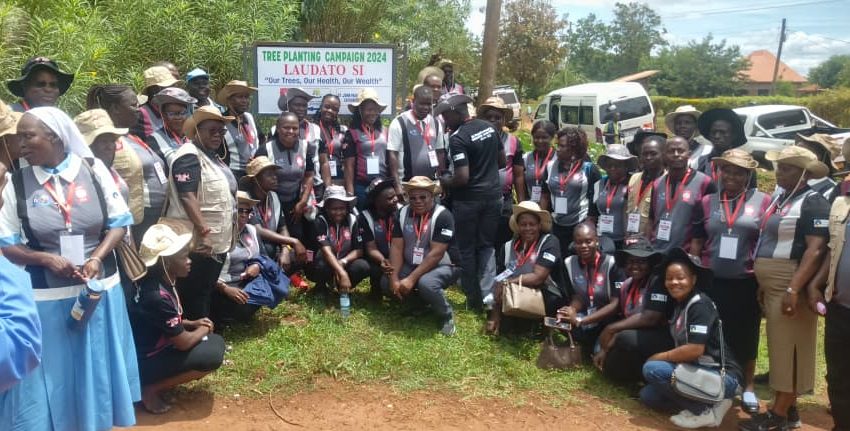
One of the most remarkable stops was at St. John Paul II Balawoli Catholic Parish, where participants witnessed an inspiring story of environmental restoration. What was once a barren and rocky landscape has been transformed into a lush, green environment through sustained tree planting efforts. This transformation stands as a testament to the power of vision, commitment, and collective action.
“This place was once just rock, but we made a conscious decision to transform it into a forest. Today, it is green, cool, and very habitable,” shared Fr. Balikoowa Anatoli, reflecting on the journey of ecological restoration.
The initiative, supported through Laudato Si funding, aligns with the Church’s global call to care for the environment and respond to climate change through mitigation and adaptation strategies. It also embodies the theme of the week, demonstrating how a renewed mindset can lead to tangible transformation of both the environment and livelihoods.
Participants were encouraged to replicate similar initiatives in their respective dioceses. Fr. Masuti Patrick from Tororo Diocese highlighted the need for balance in environmental efforts, advising, “We encourage you to plant trees in a balanced way, 50 percent fruit trees and 50 percent timber trees, so that communities benefit both nutritionally and economically.”
The field visits showcased Caritas Jinja’s integrated approach to community development. Farmers have been supported to adopt improved agronomic practices, resulting in increased crop yields and enhanced food security. The promotion of Village Savings and Loan Associations (VSLAs) has strengthened financial inclusion, enabling communities to save, access credit, and invest in income-generating activities.
Innovations such as simple irrigation technologies are helping farmers adapt to climate variability, ensuring continuous production even during dry seasons. At the same time, efforts to improve hygiene and sanitation, particularly the construction of pit latrines and handwashing facilities, have significantly reduced disease prevalence and improved overall community health.
“We have seen a real change in our communities,” noted one group chairperson. “People are healthier, more organized, and more hopeful about their future.”
Caritas Jinja has also promoted livelihood diversification through initiatives such as liquid soap production and briquette making. These activities not only provide additional income streams but also contribute to environmental conservation by reducing reliance on firewood. Improved post-harvest handling practices have further enhanced food security by minimizing losses.
An innovative livelihood model observed during the visits was fish farming, with community groups managing ponds stocked with thousands of fish. This initiative provides both a reliable source of nutrition and a sustainable income, demonstrating the potential of integrated development approaches.
At the grassroots level, the impact of these interventions is evident in the transformation of lives and communities. The Matiki A Tukolere Women Farmers Group, led by Sekagira Robert, stands as a shining example of resilience and empowerment. Through kitchen gardening and briquette production, members are improving household nutrition and generating income, contributing to greater self-reliance.
Equally notable is the progress of the Kidera Caritas Multipurpose Cooperative Limited, established in 2024. With 117 members and the integration of 60 VSLAs, the cooperative has created a strong financial network that supports savings and access to credit. Plans are underway to expand operations through value addition, collective marketing, and improved storage and transportation systems.
“Through unity and collective effort, we are building a stronger future for our members,” said Ssemuju Moses, Chairperson of the cooperative.
The Caritas Week celebrations have drawn participation from dioceses across Uganda, including Kampala, Masaka, Gulu, Arua, Moroto, Soroti, and many others. This broad representation highlights the strength and unity of the Caritas network and underscores the importance of collaboration in addressing complex development challenges.
For SOCADIDO, the experience has been both inspiring and transformative. The knowledge gained, relationships built, and lessons learned will continue to shape its work in the Teso sub-region.
Ms. Olari Proscovia Ruth, a women’s delegate, remarked, “We return from this experience not only inspired but renewed in our commitment to serve with integrity, innovation, and faith.”
As the week progresses, the central message remains clear: transformation begins within. The theme, “Be transformed by renewing your mind,” serves as both a spiritual reflection and a practical call to action. It challenges individuals to embrace change, think differently, and act with purpose.
Ultimately, Caritas Week 2026 is a reminder that meaningful and lasting change is rooted in a renewed mindset. When individuals and institutions align their thoughts, actions, and values with the principles of compassion, justice, and service, the impact extends far beyond projects, it transforms lives, communities, and society at large.