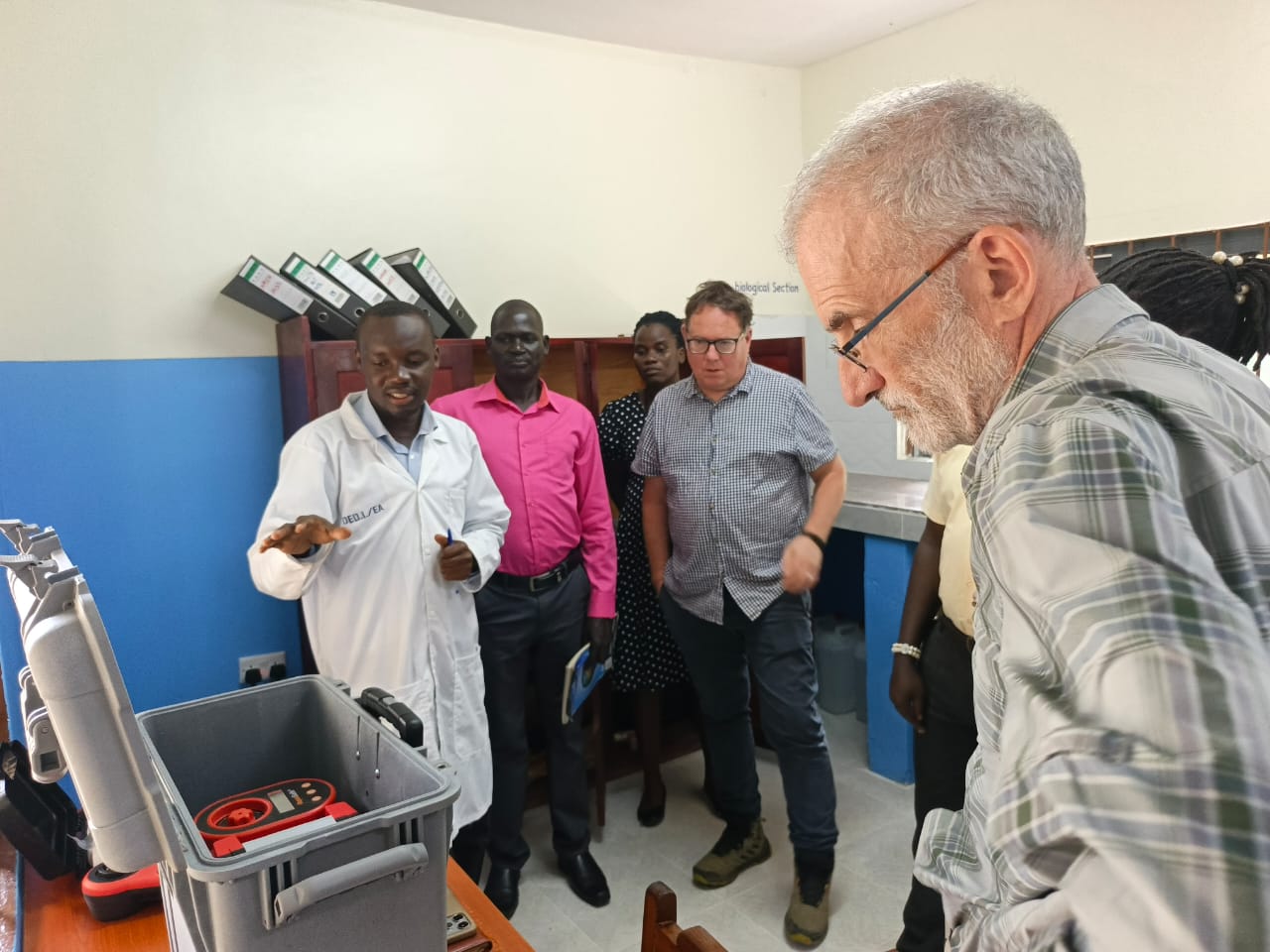
In order to improve public health and strengthen water safety systems in Eastern Uganda, the Soroti Catholic Diocese Integrated Development Organization (SOCADIDO) has established a modern water quality testing laboratory at its offices in Soroti City. The new facility is expected to play a transformative role in ensuring access to safe drinking water across the Teso sub-region.
The laboratory represents a strategic investment in community well-being and reinforces SOCADIDO’s position as a leading actor in water, sanitation, and hygiene (WASH) interventions. The facility aims to detect contamination early, guide treatment efforts, and ultimately reduce the burden of waterborne diseases among vulnerable populations.
The launch of the laboratory recently attracted international attention when a delegation from Just a Drop (JAD), one of SOCADIDO’s key funding partners, visited the facility. The organization has been supporting School WASH interventions at Adepar Primary School and Aakum – Acowa Primary School in Kapelebyong District, and the visit offered an opportunity to assess progress and explore future collaboration.
The visiting team, led by Jonathan Garrard Head of Programmes and Lawrence Brown Technical Advisor all from JAD, expressed strong admiration for the laboratory’s design and functionality. They described it as a forward-looking investment that reflects both technical excellence and a deep commitment to community health.
“We are truly impressed by what SOCADIDO has established here,” said Lawrence Brown. “This is a modern, well-thought-out laboratory that reflects both technical ambition and a genuine concern for the well-being of the communities served.”
The laboratory is equipped to test a wide range of water quality parameters, covering physical, chemical, and microbiological aspects.
These include pH levels, turbidity, colour, temperature, electrical conductivity, total dissolved solids (TDS), hardness, and the presence of substances such as iron, fluoride, nitrates, nitrites, sulphates, and phosphates. It also measures residual chlorine levels and conducts microbiological analysis for indicators such as total coliforms and Escherichia coli (E. coli), which are critical in assessing contamination risks.
Speaking during the visit, Alfred Otworot, Head of Monitoring and Evaluation officer at SOCADIDO, emphasized that the laboratory is a product of both institutional commitment and strategic collaboration. He revealed that 60 percent of the funding came from SOCADIDO’s internal resources, while 40 percent was contributed by Sign of Hope with support from BMZ.
“This investment demonstrates our commitment to building sustainable systems that directly improve the lives of the communities we serve,” Otworot noted.
The conceptualization and establishment of the laboratory were spearheaded by Matilda Okiror the Human Resource Officer at SOCADIDO, whose vision is to elevate the facility to national recognition. Okiror highlighted the need for additional equipment, including tools for alkalinity testing and a refrigerator for proper storage of samples and reagents.
“Our goal is to grow this into a nationally recognized laboratory,” she said. “While we have made significant progress, we still require key equipment and supplies to enhance our capacity. For instance, we currently lack chlorine supplies, which are essential for immediate intervention when contamination is detected.”
Technical guidance from partners has already begun shaping the laboratory’s operational approach. Lawrence Brown advised SOCADIDO to adopt simple, scalable solutions such as the use of chlorine tablets at water sources. This, he noted, is a cost-effective method that can significantly improve water safety at the community level.
Rev. Fr. Omaria Michael, the Diocesan Development Coordinator, underscored the broader motivation behind the investment.
“Access to safe water is not a luxury, it is a fundamental human need,” he said. “Our intention is to ensure that the communities we serve drink clean and safe water. That is why we made this investment.”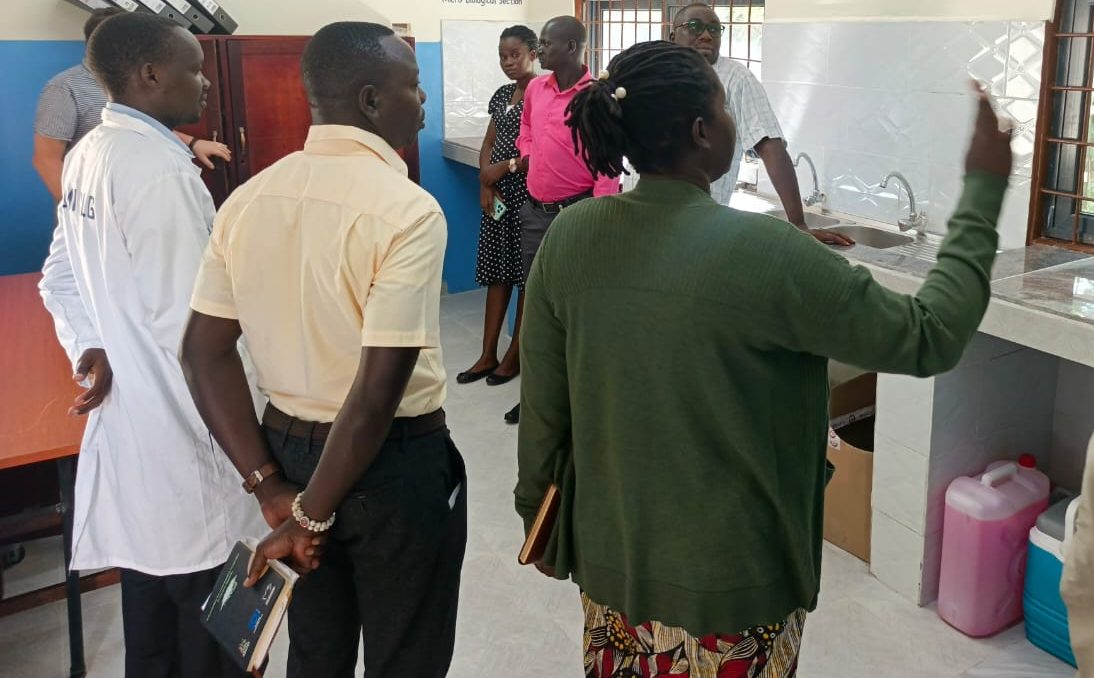
He further explained that while the laboratory may eventually offer commercial services as it works toward attaining national status, the immediate priority is to serve vulnerable communities at no cost.
The establishment of the laboratory also builds on SOCADIDO’s track record of impactful WASH interventions. According to implementation reports presented by Alfred Otworot, the organization has already achieved remarkable results through its projects, particularly the Aakum–Acowa Primary School School WASH initiative.
The project reached at least 84 households and delivered critical infrastructure, including the drilling of one borehole and the construction of two 5,000-litre water tanks at the school. These improvements significantly enhanced access to clean water for both the school and the surrounding community.
The outcomes have been equally impressive. The project achieved zero percent open defecation status and 100 percent latrine coverage. Handwashing compliance reached 98 percent, while 69 percent of households established improved latrines with complete units. Additionally, 100 percent of households now have handwashing facilities, with 98 percent equipped with both soap and water.
These interventions have led to a dramatic 88 percent reduction in fly populations, contributing to improved sanitation and hygiene conditions. The impact extends beyond health, influencing education and social well-being.
The drilling of the borehole reduced the distance to water sources from three kilometers to just one kilometer, saving time and energy for both students and community members. This has translated into improved school attendance and academic performance. Notably, the school achieved its first-ever first-grade result last year, an accomplishment attributed in part to improved WASH conditions.
The project has also had a profound effect on gender dignity and inclusion. There has been a reported 95 percent improvement in girls’ daily participation in school activities, with increased confidence and openness, even during menstruation.
These achievements underscore the critical link between water, sanitation, health, and education, an understanding that is central to SOCADIDO’s mission.
SOCADIDO remains committed to expanding its impact. With continued support from partners like Just a Drop, SOCADIDO aims to strengthen the laboratory’s capacity, enhance technical expertise, and scale up water quality management efforts across the region.
Jonathan Garrard reaffirmed this commitment, pledging to connect SOCADIDO with additional partners who can provide technical support and training.
The establishment of the water testing laboratory marks a major milestone in the journey toward safer water and healthier communities in the Teso sub-region. It is a testament to what can be achieved through strategic investment, strong partnerships, and a shared vision for a better future.