
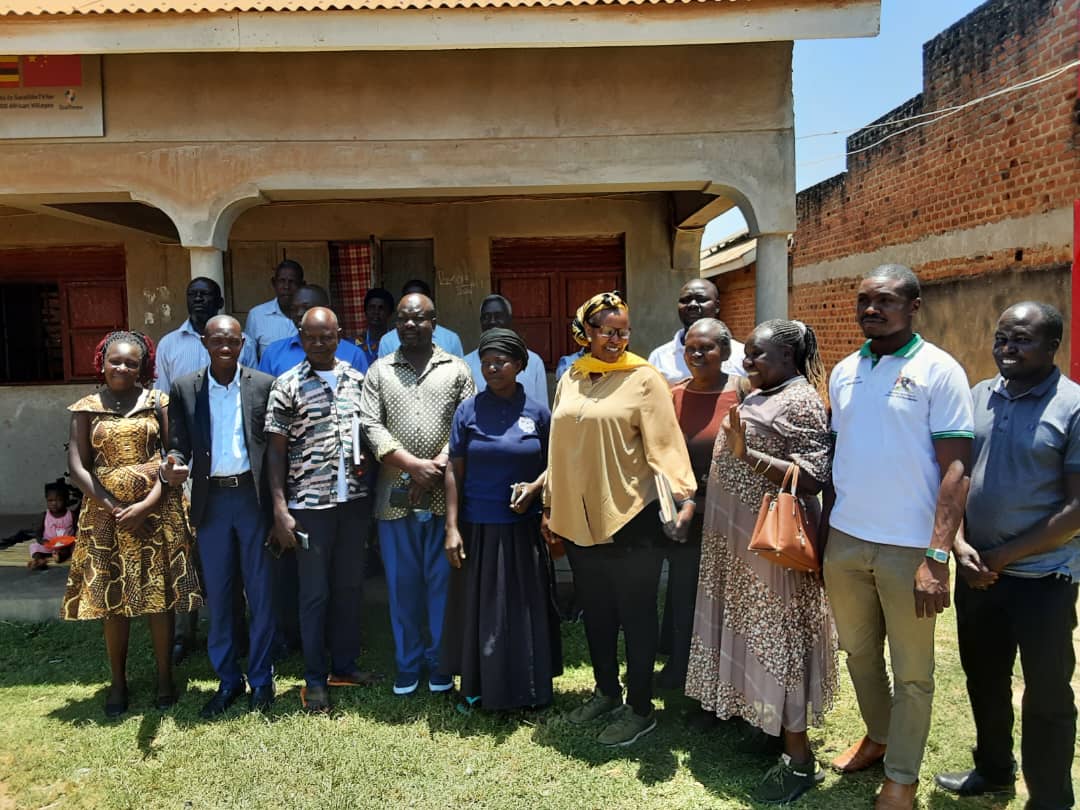
Leaders from Ngora District Local Government together with Sub-County authorities today 16th March 2026 conducted a joint monitoring visit to farmer groups participating in the National Oilseeds Project (NOSP) in the district.
The visit aimed at assessing progress made under the project, strengthening collaboration between government leadership and farmers, and addressing challenges affecting implementation at community level.
The monitoring team was led by the Resident District Commissioner (RDC), Madam Josephine Omara Ngora, and included LCV Chairperson Hon Odongo Mike Laasio, District Vice LC V Hon Grace Amongin, District Councilors; Hon Olupot Herbert, Hon Olinga Godfrey, and Hon Aanyi Helen Oujo, District Internal Security Officer (DISO) Bwana Baraza Kildone, District Agricultural Officer (DAO) Mr. Ariong Gideon, and the Deputy Chief Administrative Officer Madam Chelengat Irene Kapsawani.
They were joined by Sub-County leadership led by the Senior Assistant Secretary Madam Abilo, members of the Sub-County Executive Committee (SEC), and the Sub-County Councillor.
The delegation visited two farmer groups supported under the project: Anyoutu Women’s Group in Kadok Village, Atoot Sub-County and Omo Ekeunos Women’s Group in Tiling Village, Kobuin Sub-County
The National Oilseeds Project (NOSP) is a Government of Uganda initiative implemented through the Ministry of Agriculture, Animal Industry and Fisheries (MAAIF) to accelerate commercialization of oilseed value chains and improve the livelihoods of smallholder farmers.
The project is supported by funding from the International Fund for Agricultural Development (IFAD) and the OPEC Fund for International Development.
In the Mid-North Hub covering the Teso Sub-region, Soroti Catholic Diocese Integrated Development Organization (SOCADIDO) serves as the private service provider responsible for delivering extension services, strengthening farmer groups, and supporting agribusiness development.
Across the Teso sub-region, the project is currently working with 553 farmer groups, promoting improved production of key oilseed crops including sunflower, soybean, sesame, and groundnuts, while strengthening farmer organizations and market linkages.
During the monitoring visits, district leaders engaged directly with members of the farmer groups, listening to their experiences and reviewing progress made in implementing project activities.
The farmers appreciated the support provided under the project, particularly in strengthening group organization, improving farming practices, and promoting oilseed production as a pathway to improved household incomes.
However, members of the farmer groups also raised several issues affecting their operations and productivity.
Among the concerns highlighted were the need for timely delivery of planting materials for demonstration sites, which farmers indicated is critical for aligning planting schedules with the agricultural seasons.
Farmers also noted the limited availability of government extension staff, which sometimes constrains access to regular technical guidance.
In addition, farmers expressed the need for supportive subsidies such as tarpaulins, which are important for post-harvest handling and drying of produce to maintain quality.
Another challenge raised by the groups was the tendency of some members to abscond with group funds, an issue that undermines trust and affects the financial sustainability of farmer organizations.
District leaders acknowledged these concerns and emphasized the importance of strengthening group governance, financial accountability, and collaboration between farmers and local government structures to address emerging challenges and ensure sustainability of the groups.
Speaking during the visit, Mr. Moses Ariong, Field Extension Officer at SOCADIDO, expressed appreciation for the commitment demonstrated by district leadership in supporting the implementation of the project. He noted that SOCADIDO is encouraged by the level of engagement shown by district leaders in monitoring field activities and following up on project results.
“We are very encouraged by the level of interest that the district leadership is showing in the achievement of results under the National Oilseeds Project. Such collaboration strengthens accountability, motivates farmer groups, and reinforces the shared goal of improving livelihoods across the Teso sub-region,” Mr. Ariong said.
The visit reaffirmed the importance of close collaboration between district leadership, technical teams, implementing partners, and community farmer groups in driving agricultural transformation and improving rural livelihoods.
Joint monitoring engagements such as this provide an important platform for identifying challenges, strengthening accountability, and ensuring that the intended benefits of the project reach farming communities.
This is a good gesture. It’s good to host such visitors, they give an encouragement and strengthen both staff and the beneficiaries
It is a commendable job done by all stakeholders. However, some persistent challenges, such as value addition to farmers produce, adverse climate conditions, provision of viable planting seed materials and lack of lucrative market avenues continue to keep farmers in viscous circles of losses. I suggest that small scale irrigation schemes be introduced; affordable motorized oil press machines be procured and taken nearer to farmer groups for value addition; improved sunflower planting seeds be be brought nearer and not for farmers to follow them as far as Lira and other distant locations.
I am a senior rural development consultant based in Wera, Amuria. I can also be reached via WhatsApp/call 0704517101 and 0772517101. I also do TOT and training of farmers on “One Acre Model” of planting trees for keeping free range poultries; that is, addressing issues of environment and also attacking the problem of poverty by the horns!
This is good. Immense benefits can accrue from these joint efforts.