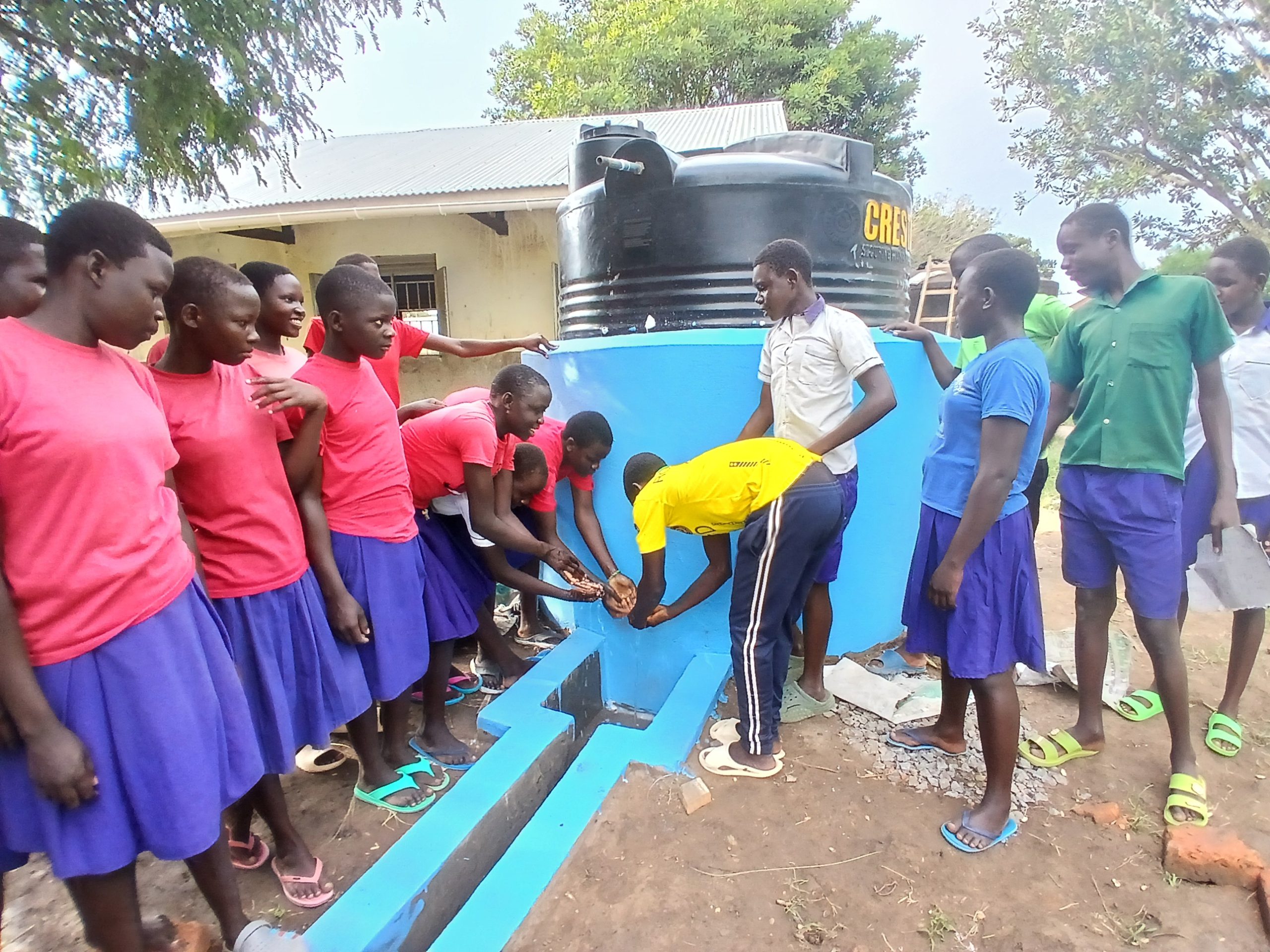
In the quiet rural setting of Atirai Village in Akum Parish, Acowa Sub-county, deep in Kapelebyong District, stands Aakum – Acowa Primary School, a Church of Uganda-founded institution that has become a symbol of resilience, transformation and community revival.
With an enrollment of 1,138 learners, only seven classrooms, and ten teachers, the school represents both the promise and the challenges of rural education in Uganda. Yet beyond the statistics lies a powerful story of partnership, one that has changed not just a school, but an entire community.
At the center of this transformation is Soroti Catholic Diocese Integrated Development Organization (SOCADIDO) through support from Just A Drop and ATLAS COPCO, whose one-year WASH intervention project has redefined hygiene, sanitation, and dignity in Aakum-Acowa primary school and its surrounding catchment communities.
Despite infrastructural constraints, Aakum – Acowa Primary School is among the performing schools in Kapelebyong District.
Last year 2025, the school registered 30 Primary Seven candidates. Of these: One pupil scored Division I, Thirteen scored Division II, Thirteen scored Division III, and One scored Division IV
For a rural school grappling with limited facilities, these results are more than numbers, they are proof of determination and attributed to the support of the project
The School Head teacher Mr. John Iningo speaks with pride and gratitude: “We are very happy to receive the SOCADIDO team here at our school. A lot has been done, and we are grateful.”
But he is also quick to point out the challenges. Seven classrooms serve over 1,100 learners. Some pupils study under trees. Teachers share latrines with pupils but hope now outweighs hardship.
THE WASH PROJECT: A YEAR OF IMPACT
According to the Project Officer Amodoi Wilbrod, the intervention, titled Strengthening WASH in Rural Schools and the Catchment Communities of Aakum – Acowa Primary School, ran from February 2025 to February 2026.
It focused on three key outcomes:
- Sustainable access to safe water
- Improved sanitation facilities and practice
- Enhanced good menstrual health and hygiene management for adolescent girls
The results have been remarkable.
Safe Water Access
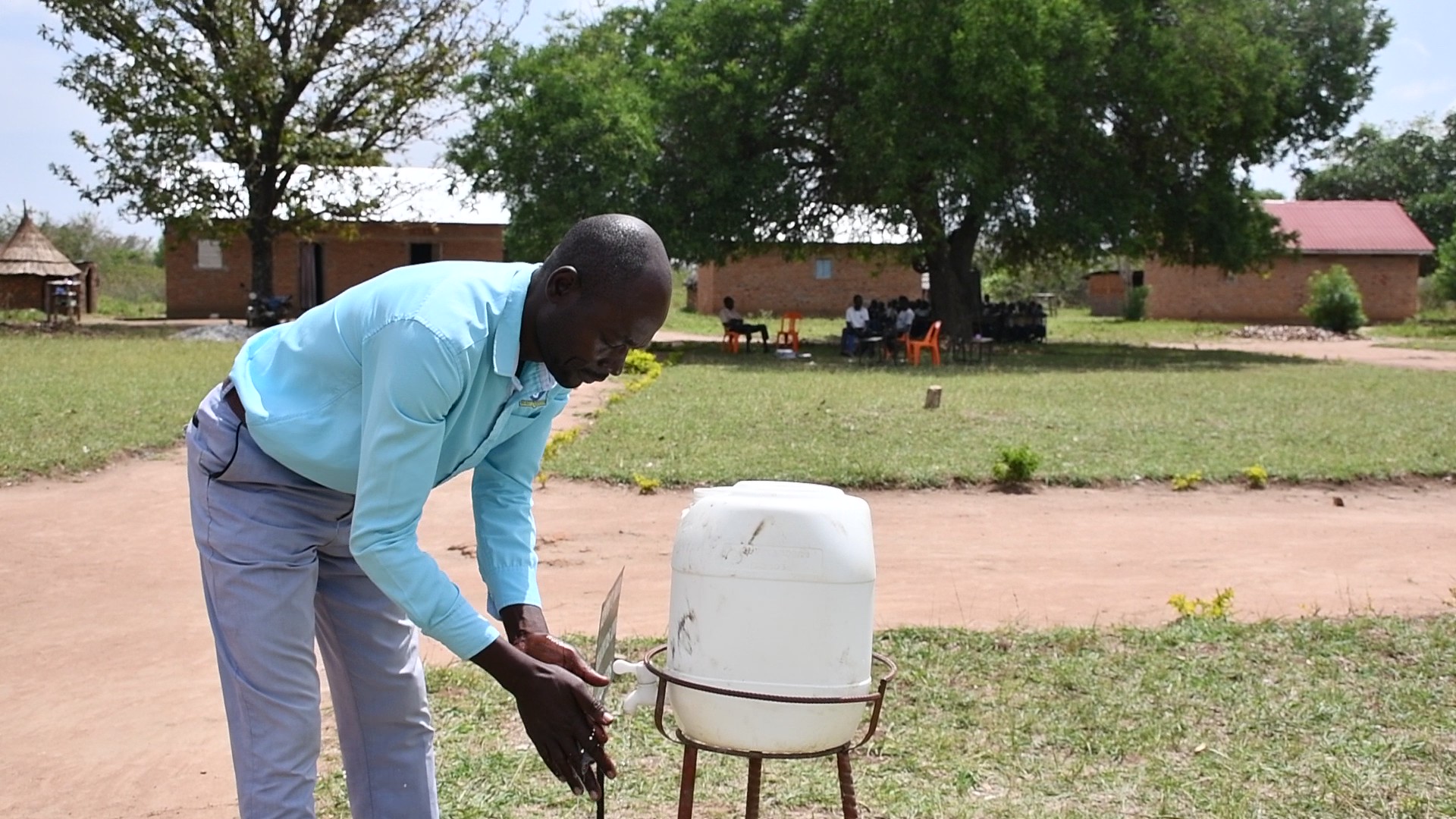
One borehole was drilled to serve the school and surrounding community. Two 5,000-litre water tanks were installed to promote handwashing.
For a community that once walked over eight kilometers in search of clean water, the borehole is nothing short of life-changing.
The LC1 Chairperson Atirai Village Vincent Oleumo recalls the past: “Some time back, our women used to carry jerrycans on their heads and walk more than eight kilometers to fetch water. But now, when SOCADIDO came in, people can access clean and safe water.”
Access to water has strengthened hygiene practices in homes and at school. Every household now has handwashing facilities. Before the project, hygiene and sanitation levels in Atirai Village were estimated at around 25–38 percent.
Today, the village has been declared Open Defecation Free (ODF) by the ministry of health and the ministry of water and environment.
This means: Every household has a pit latrine, Bath shelters have been constructed, drying racks for utensils are present, waste pits are in use, and Handwashing facilities are operational. Flies no longer spread contamination from exposed faeces because of the presence of tight fitting covers in all the pit latrines and no open defecation. Diarrhea cases have reduced drastically. Children are healthier.
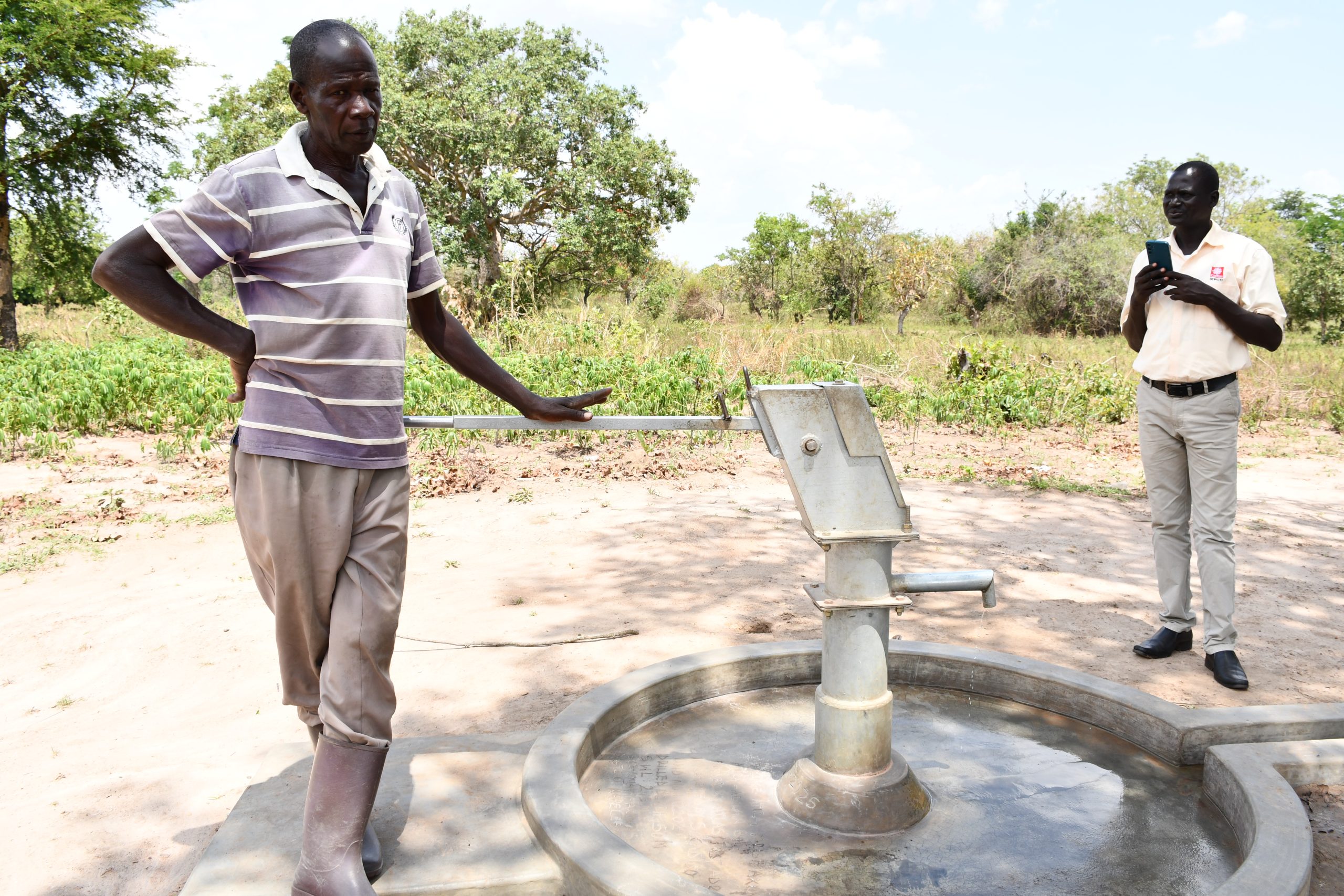
Imalingat Edith, a Village Health Team member, testifies: “We used to have cases of diarrhea due to open defecation. But with pit latrines, such cases have reduced. We are saving money that used to go to treating malaria and typhoid for other productive work.”
Angela Rose Asele echoes similar sentiments: “From the time SOCADIDO came, sicknesses have reduced. There is no open defecation. Even paying school fees is now easier because we have saved money from high treatment costs.”
Six hundred community members underwent six months of hygiene training. They learned to build improved pit latrines with cemented floors, covers, doors, and handwashing facilities. They constructed bath shelters and rubbish pits. They embraced cleaner kitchens and utensils.
The transformation has been so profound that the district health department recognized Atirai as the cleanest community in the entire district, awarding them a certificate of recognition.
SOCADIDO also constructed: Two blocks of pit latrines (five stances each), An incinerator for safe disposal of menstrual waste, two improved rubbish pits, and A “talking compound” with hygiene messages. For girls, the latrine block includes a changing room, ensuring privacy and dignity during menstruation period.
Previously, menstruation was a silent barrier to education. Girls missed school due to shame or lack of facilities. Today, reusable sanitary pad training empowers them. The Senior Woman Teacher now oversees the activity, and girls confidently make and use their own sanitary pads.
Mr. Amodoi explains that: “Our purpose is to ensure that an adolescent girl attends all classes and continues with her education. Menstruation is not sickness; it is normal health.”
Parents, PTA members, and school leaders were engaged in conversations to break stigma and today, menstrual hygiene is openly discussed as a health matter, not a taboo.
Beyond hygiene, the project introduced economic empowerment for learners, to prepare the learners to be productive and generate income for procuring the materials for making reusable sanitary pads.
Pupils were trained to grow tomatoes, onions, and eggplants. Though weather challenges limited production last year, the school earned UGX 53,000 from vegetable sales. This year, with improved rains, expectations are higher.
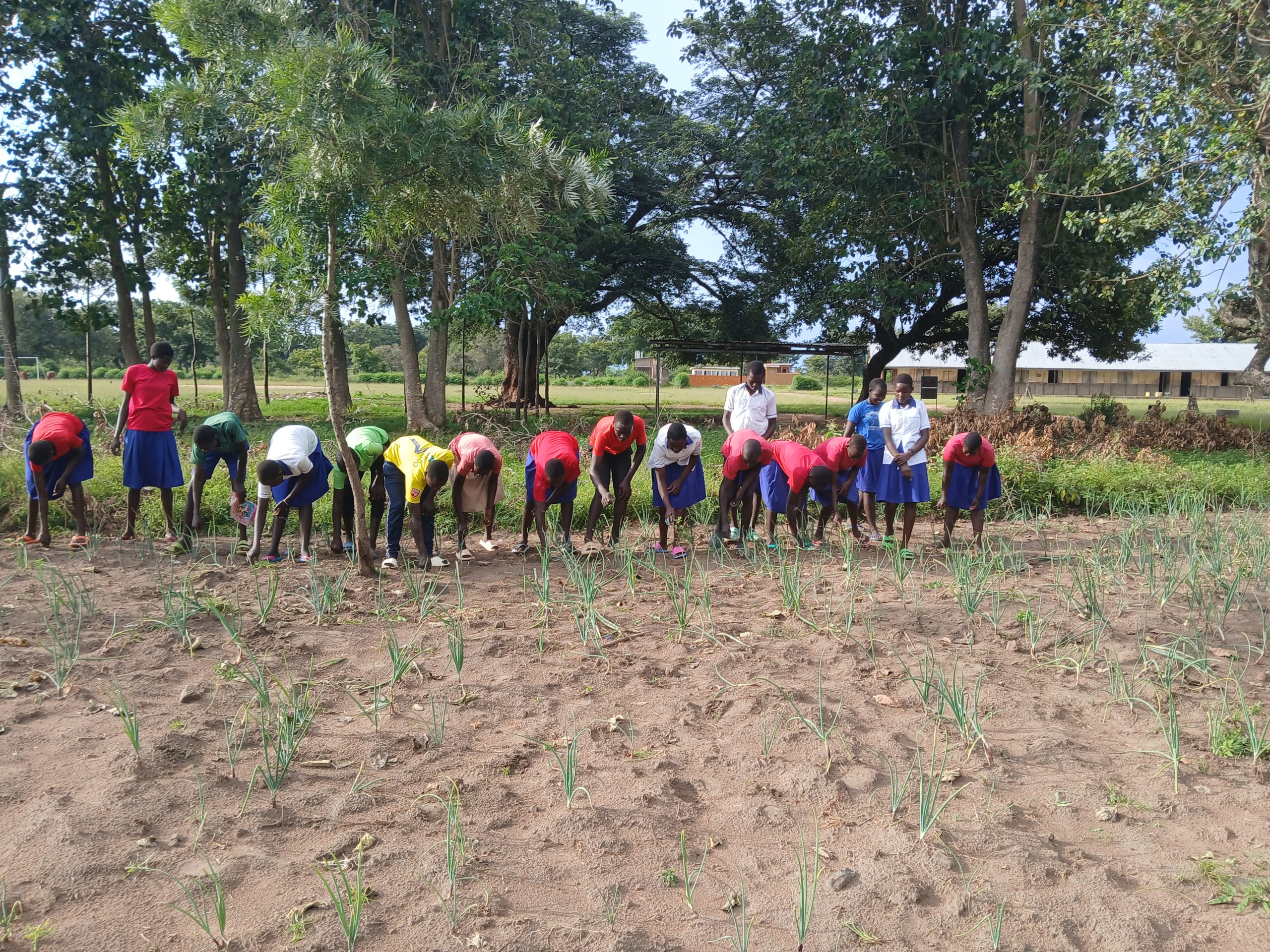
The produce supplements school feeding programs and teaches entrepreneurship. Compost from waste pits enriches gardens, closing the loop between sanitation and agriculture.
The success of the project did not come by chance. LC1 Chairperson Oleumo Vincent recounts how SOCADIDO first met local leaders before community mobilization.
“They shared with us and we agreed to promote hygiene and sanitation by all means.”
The project was participatory. Community took ownership. They understood that hygiene was not for NGOs, it was for their own lives.
Kevin Ijangat describes how his family replaced a collapsing latrine after training:
“We were first using an old-fashioned latrine. But when SOCADIDO came, we constructed a new permanent pit latrine to maintain good health, even though we live in grass-thatched houses.”
Behavior change became visible in small details, properly washed hands, clean nails, separated animal shelters to prevent disease transmission. Goats now sleep in designated structures. Compounds are swept. Homes are painted, sometimes using crushed burnt bricks, charcoal and ashes as local paint.
Agnes Akiror adds: “Mosquitoes have reduced. These days I can even sleep without covering myself and using mosquito net because my home is clean.”
Head teacher Iningo appeals to well-wishers: “We pray that another NGO can come and help construct latrines for teachers. We shall be very grateful.”
His gratitude is clear, but so is his hope for further support. Before the project, children frequently fell sick. Diarrhea, vomiting, and hygiene-related diseases were common.
Today: Households are ODF, Clean water is accessible, Handwashing is habitual, Menstrual hygiene is normalized, School attendance has improved, and medical expenses have reduced.
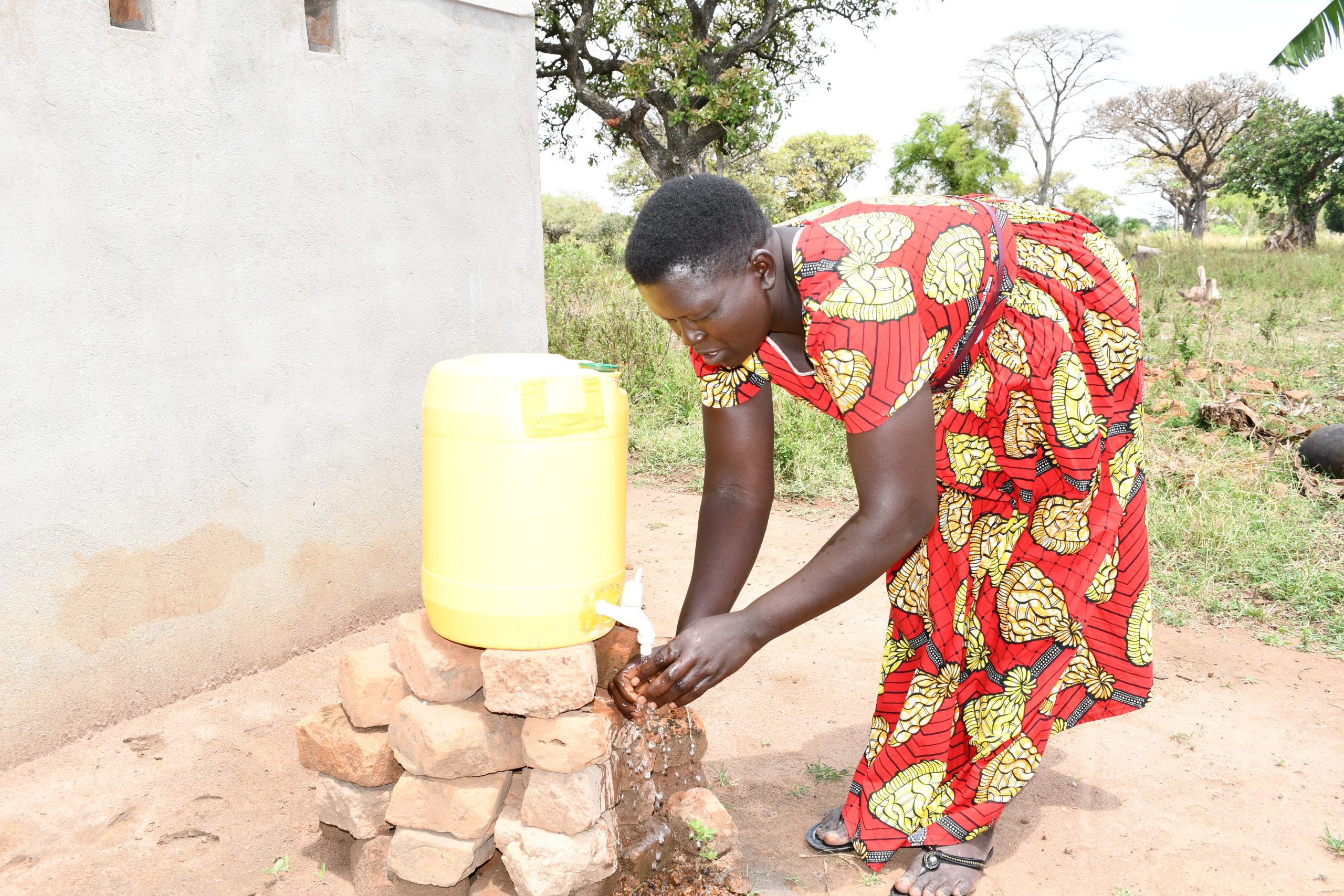
Health translates to productivity. Parents save money. Children stay in school. Communities thrive. Akum – Acowa Primary School is more than a beneficiary; it is a model. It shows that sustainable change in rural Uganda requires: Community engagement, School-based interventions, Gender-sensitive facilities, Local government collaboration, and Behavioral change communication
It shows that infrastructure alone is not enough ownership matters. As Amodoi reflects: “When we entered, hygiene was at 38 percent. Today the village is Open Defecation Free. That is transformation.”
In Atirai Village, transformation is visible in clean compounds, confident school girls, thriving vegetable gardens, and a borehole that symbolizes dignity. The journey from 38 percent sanitation coverage to ODF status is a testament to what partnership can achieve.
Yet the story is not finished. Classrooms are still few. Teachers still share facilities. Water needs motorization. Expansion is necessary. But hope is firmly planted. Aakum – Acowa Primary School stands as living proof that when communities listen, when leaders collaborate, and when organizations extend a helping hand, rural transformation is not a dream, it is a reality.
Incredible work by SOCADIDO. This is worth a golden mention in every boardroom.
Thank you
SOCADIDO and all involved in the project supported in Aakum Acowa PS