
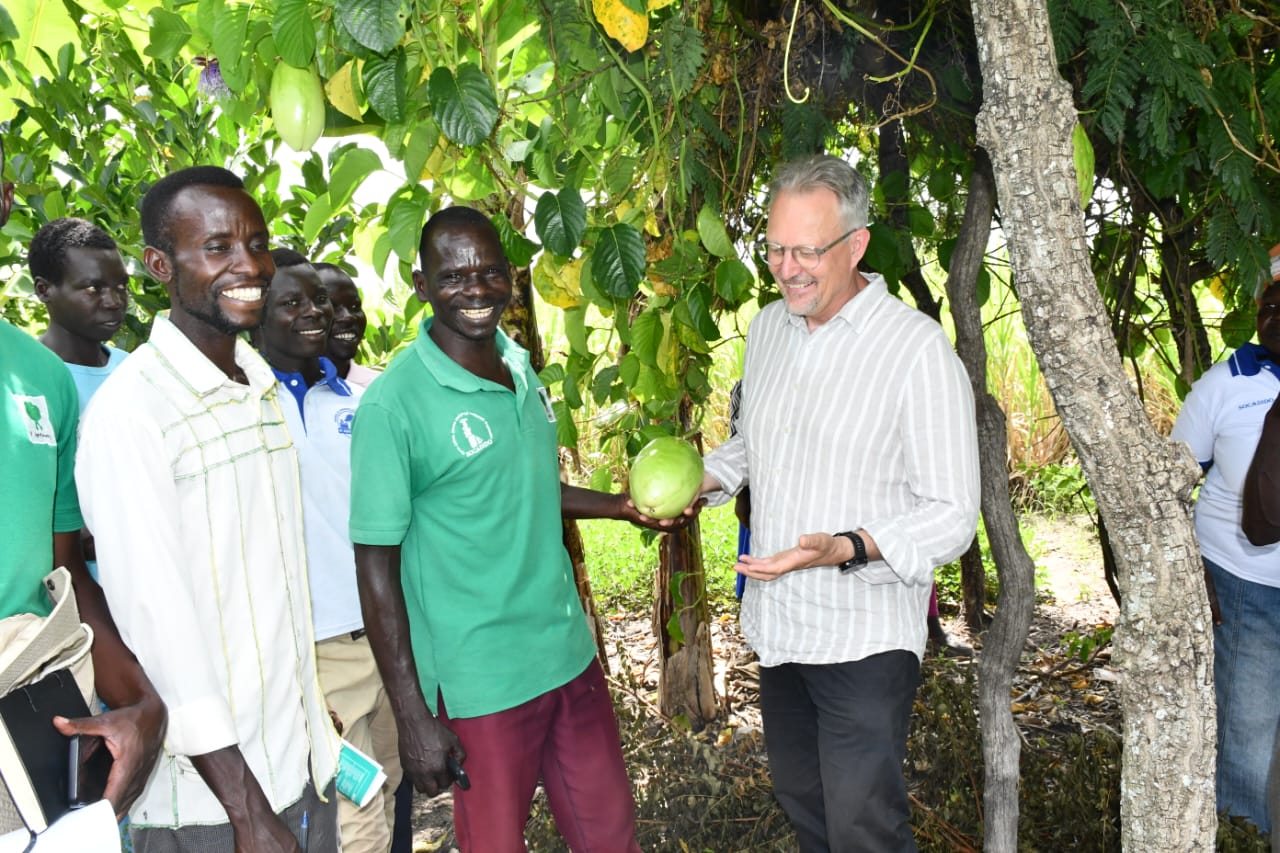
On a five-acre stretch of land in Okerai B Village, Okungur Sub County in Kapelebyong District, Eastern Uganda, Samuel Echodu no longer sees soil as a blank surface waiting for rain. He sees Biodiversity showing rows of sugarcane, bananas, young pineapple shoots, pawpaw trees, jackfruit, passion fruit, beehives humming at the edge of a homestead, and a small fish ponds that turn water into protein and income. He sees beans, cowpeas, Bambara nuts, onions, sunflower and maize growing in a careful pattern across two acres. He sees, in short, a future that once looked unlikely.
Echodu 51 years old , a father of 10 children, one of the farmers whose life has changed through the “Enhancing Sustainable Agricultural Livelihoods for Incomes and Biodiversity among rural farmers in Teso sub region” project, (ESALI).
“In 2003, insurgencies forced us to leave our homes and move to Obalanga camp,” Emasu recalls. “In 2004, we were resettled in Osukunya before finally returning to Okerai B in 2006. The Organizations like Concern Worldwide supported us until peace gradually returned.” “When people returned from camps, there was a lot of environmental destruction because many trees had been cut down,” he explains. “The agroforestry trainings helped us understand the importance of restoring trees and protecting the environment.
By 2010 and 2011, peace had returned more fully between the Iteso and the Karamojong, allowing communities to coexist with greater confidence. Yet the long years of upheaval had left scars: degraded landscapes, cut trees, weak farming systems and a generation of households trying to recover from repeated loss.
When ESALI arrived in September of 2023, the project did not begin with handouts. It began with Community entry Sensitization activities . Farmers were Organized in groups, trained and encouraged to see their land differently with SALM practices . Okerai B Farmers Group and Savings began with 30 members (13 men and 17 women) and quickly became more than a support circle. It became a place where ideas could be tested, risks could be shared and discipline could be learned.
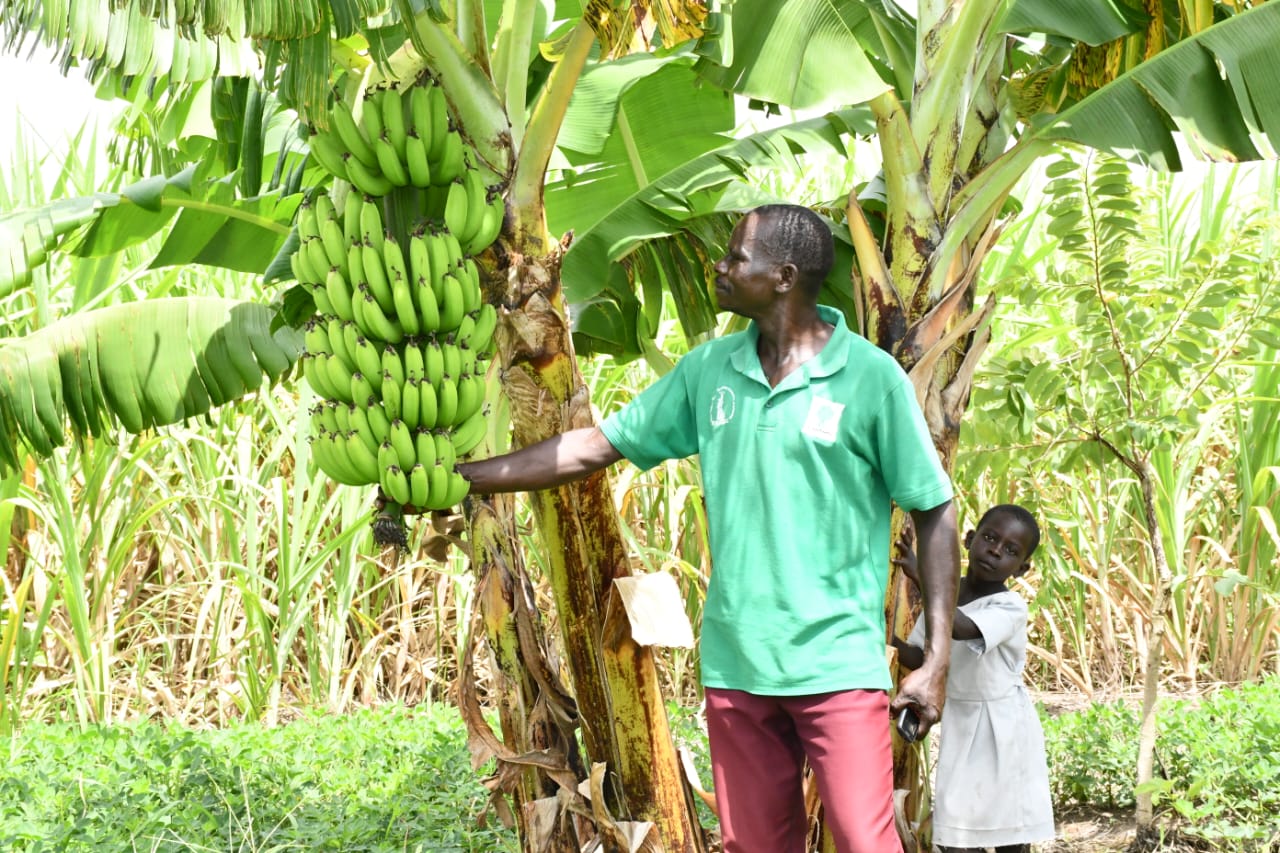
The group members were trained in agroforestry, a practical response to a painful reality of Climate change effects. In the years spent in camps and in the turbulence of displacement, many trees had been cut down or destroyed. The project encouraged farmers to restore what was lost by planting trees again, not as decoration but as infrastructure shade for animals, fruit for families, roots for soil and a buffer against climatic stress. They were also trained in kitchen gardens, sometimes called nutrition gardens, and in broader farming practices meant to make households less vulnerable to hunger, moving Long distances and rising costs of vegetables
The results are visible. Since the partnership began in 2023, the ESALI project has reached 16,008 people directly and indirectly, with women making up 60 percent of that number. It has supported the formation of 40 village savings and loan associations, or VSLAs, and facilitated the planting of 33,500 agroforestry trees.
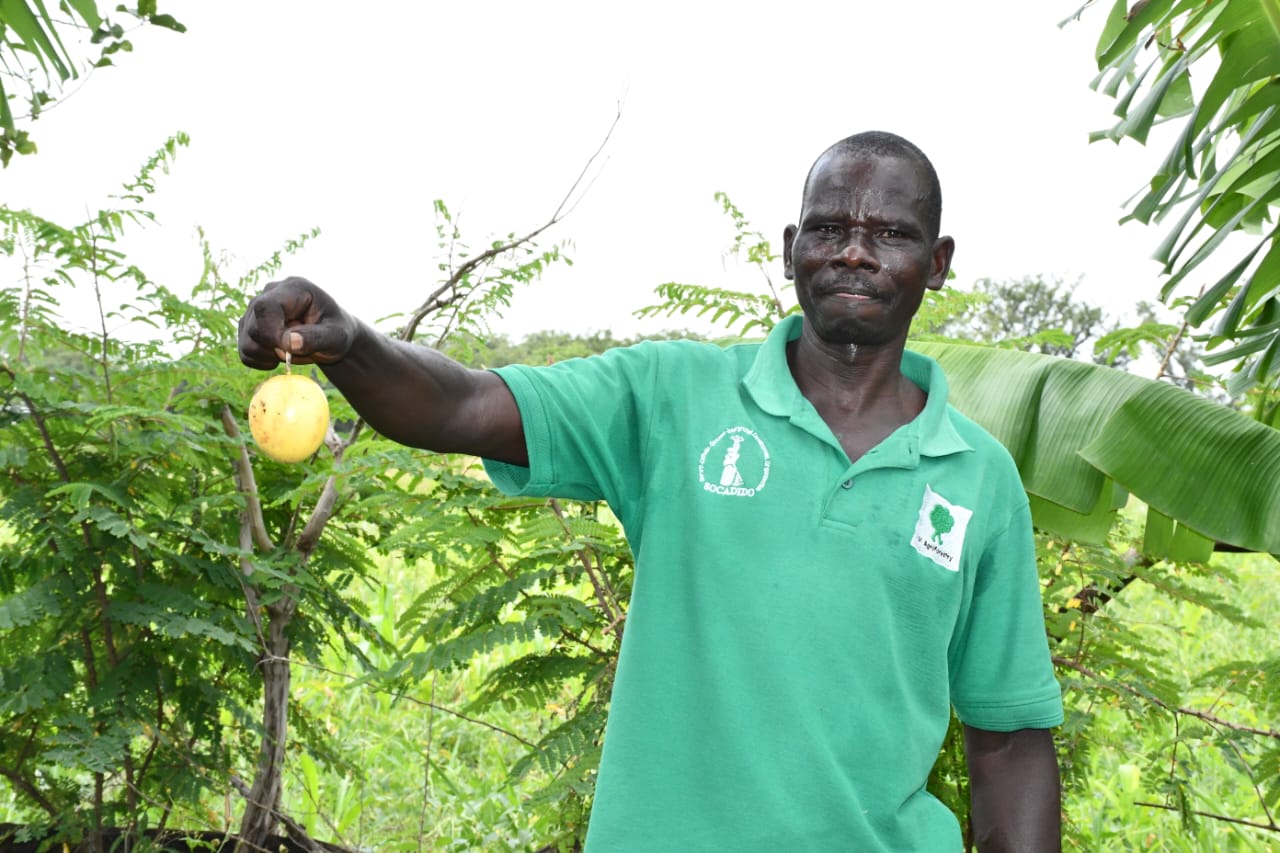
Those figures, though impressive on paper, find their meaning in households like Echodu’s. At his homestead, the work is practical and relentless. Sugarcane has become a source of cash. Bananas feeds the family and sell in local markets. Pineapples and passion fruit add value. Jackfruit, pawpaw and beehives diversify the income stream and make the farm less dependent on a single season. The fish pond offers another layer of resilience, especially for a household raising 10 children. The beans, cowpeas, Bambara nuts, onions, sunflower and maize grown on two acres help stretch food supplies and reduce the pressure of market purchases.
What makes Echodu’s story stand out is not just that he farms more, but he has embraced diversification concept in his farm. The land is no longer used in isolation. Crops, trees, livestock, fish and savings are linked together therefore symbiotic relationship is evident in the farm. This is what development experts often describe in broad terms as resilience. In Echodu’s case, it looks like school fees, meals, medicine and dignity is sorted out.
“I used to farm mainly for survival,” Echodu explains. “But after receiving the many trainings from ESALI –SOCADIDO project, I learnt how to treat farming as a business and how to diversify production to reduce risks and increase income.”
The savings group has also contributed on how families handle shocks. Members can borrow for seeds or school fees, reducing the need to selling of assets for settling arising needs.
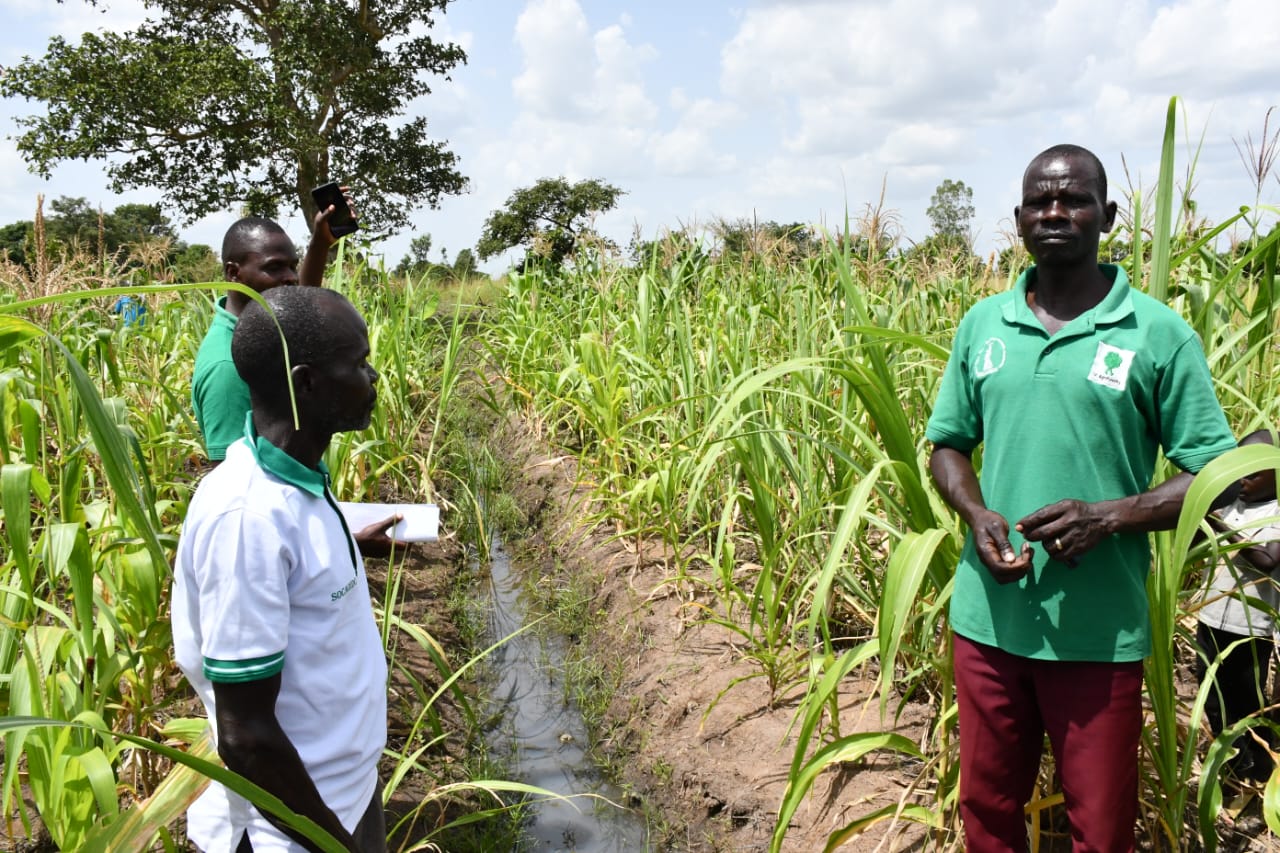
In a district where dry spells can wipe out hope as quickly as a pest outbreak, access to even modest finance can determine whether a family stays on course or slips backward.
That is one reason the next phase of the project has been framed as a step forward rather than a fresh start. Richard Pius Okiria the Project Coordinator ESALI Project at SOCADIDO says ESALI-II will offer more training on pest and disease control, an issue that is growing more urgent as temperatures shift and crop pressures intensify.
He also said the project will include financial linkages, through which SOCADIDO will connect farmers to financial institutions so they can access larger loans and invest more confidently in production.
“The emphasis on finance is not accidental. Rural farming often fails not because farmers lack ambition, but because they lack capital at the moments when it matters most, when seed must be bought, when pests strike, when irrigation is needed, when school fees collide with harvest delays. The savings culture built under ESALI is meant to prepare farmers for that reality, while the financial linkage component aims to widen their options,” said Okiria.
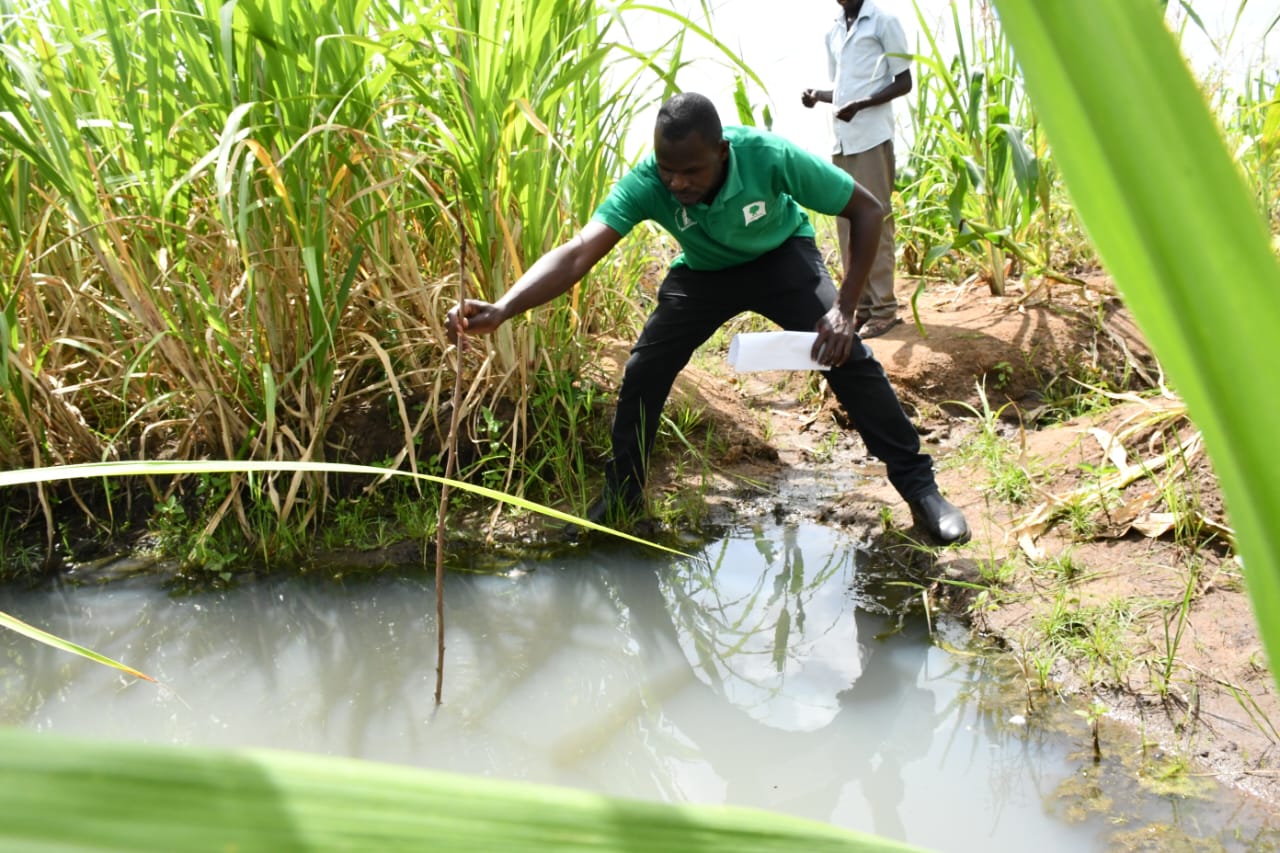
Musema Tairi, Vi Agroforestry’s Environment Climate Change Resilience Program Officer, praised Echodu and his family for putting into practice the knowledge they received rather than letting it sit idle.
He said he hoped that on a future visit he would meet not only Echodu, but other farmers he had helped to inspire. He also urged farmers to take savings seriously, arguing that a disciplined savings habit can reduce the burden of pest and disease control by making credit more accessible when emergencies arise.
Henrik Häger Brundin, Vi Agroforestry’s country manager in Uganda, described the visit as deeply humbling, noting the time and energy that have gone into building the partnership and walking with communities through the project.
“It has been a very good visit,” Henrik noted. “Seeing the transformation among farmers shows that this work requires time, commitment, and energy, but the impact is meaningful and long-lasting.”
For Echodu, farming is no longer simply a way of surviving. “It is now my source of dignity, hope, and a better future for my children,” he says proudly.
Waoooh this is so Interesting and compelling and fascinating.Weldone Mr Echodu for the great work , Infact this has happened due to the high levels of Dedication,Being compelled by the eageness of fighting Poverty and effects of climate change ,I therefore encourage other farmers also to Emulate what is doing inorder to Change the Status Quo of our Households and Livelihoods
Great work by Mr.Echodu Samuel
Quite impressive.am requesting for the same training in soroti.oculoi in particular